Connect With Us
Blog
Items filtered by date: December 2021
Tuesday, 28 December 2021 00:00
Can Running Shoes Be Worn for Walking?

Shoes made for walking are usually different from those designed for runners because the mechanics of each activity are different and require shoes that meet those needs. The main difference between walking and running is that when you run, there is a moment when both feet are off the ground. When you walk, one foot is always on the ground. The shift from one foot to the other is gradual, and your weight is transferred from heel to toe much more slowly. Here are some things to look for when searching for a running shoe that you can walk in. It might be a good idea to choose a shoe with a beveled, or angled heel to help with smoother landings. The outsole should have as much ground contact as possible and because the foot bends more in walking, look for a shoe with a flexible forefoot area. Also, try to find a shoe with ample cushioning in the forefoot, but guard against too much cushioning which can tire the feet more easily when walking. If you are unsure of what shoe is best for your feet, please contact a podiatrist for recommendations.
You should always make sure your running shoes fit properly in order to avoid injury. For more information, contact Julie Jurd-Sadler, DPM from Progressive Podiatry. Our doctor can provide the care you need to keep you pain-free and on your feet.
Choosing the Right Running Shoe for Your Foot Type
Improper shoe sizing can cause a myriad of problems for your feet. Shoes that don’t fit you properly can lead to muscular imbalances in your body, which can result in foot, knee, and hip injuries.
Tips for Finding the Right Running Shoe
- Make sure you have a thumb’s width of wiggle room between the end of your longest toe and the front of the shoe.
- There should be little to no slipping at the heel
- Don’t assume your size in one shoe brand will be your size in another
- Do not lace up your shoes too tightly
- Walk around in the store with your new shoes before you buy them
If you have any questions please feel free to contact our our offices located in Ijamsville and Mouth Airy, MD . We offer the newest diagnostic and treatment technologies for all your foot and ankle needs.
Read more about Choosing the Right Running Shoe Published in Blog
Tuesday, 21 December 2021 00:00
How MLS Laser Therapy Sheds Light on Pain and Inflammation
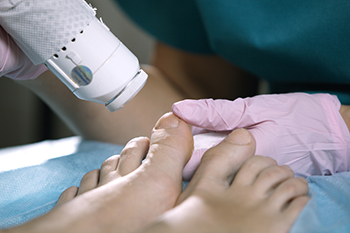
MLS (Multiwave Locked System) Laser Therapy is a non-invasive method of treatment that uses two continuous therapeutic wavelengths of light that penetrate deep into the tissue to stimulate the regeneration of cells, decrease pain and inflammation, and improve circulation to the injured area. While there may be a slight warming sensation at the site of treatment, the combination of these two synchronized wavelengths minimizes the risk of thermal damage. Treatments generally take 10-15 minutes, and the typical course of treatment entails roughly 6 to 12 treatments. Many patients experience long-term positive results from MLS Therapy, as it addresses the cause of pain rather than simply masking symptoms. Podiatrists may use MLS therapy to treat plantar fasciitis, Achilles tendon issues, bursitis, neuromas, arthritis, fractures, injuries, and more. If you have any of these conditions, talk to your podiatrist to see if you are a good candidate for MLS Laser Therapy.
MLS Laser Therapy is a successful alternative for treating any pain you may be experiencing related to certain podiatric conditions. If you are interested in MLS Laser Therapy, consult with Julie Jurd-Sadler, DPM from Progressive Podiatry. Our doctor will assess your condition and provide you with quality foot and ankle treatment.
MLS Laser Therapy
Multiwave Locked System (MLS) Laser Therapy is a patented, FDA-cleared technology that helps relieve pain and inflammation from a number of podiatric conditions, including:
- Heel Pain
- Plantar Fasciitis
- Sports Injuries
- Wounds
- Achilles Tendonitis
- Arthritis
- Neuropathy
- Neuromas
MLS Laser Therapy is an ideal alternative to surgery and prescription medication, as it has no negative side effects and encourages accelerated healing. Among its many clinical benefits, MLS Laser Therapy also:
- Reduces swelling due to bruising or inflammation
- Blocks pain
- Reduces formation of scar tissue
- Improves nerve function
If you have any questions, please feel free to contact our offices located in Ijamsville and Mouth Airy, MD . We offer the newest diagnostic and treatment technologies for all your foot care needs.
Published in Blog
Tuesday, 14 December 2021 00:00
Diabetic Neuropathy and the Feet
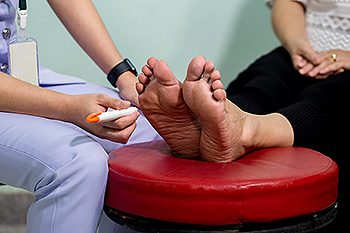
Diabetic neuropathy is a type of nerve damage that is caused by high blood sugar levels. Symptoms of diabetic neuropathy most frequently affect the lower limbs and can include pain, numbness, tingling, muscle weakness, and loss of sensation. People with diabetic neuropathy are also at an increased risk of developing diabetic foot ulcers, open wounds on the feet that are difficult to detect (due to a loss of sensation) and that heal slowly and poorly. Other than managing your blood sugar levels, the best way to prevent complications from diabetic neuropathy is to perform daily foot checks. Inspect your feet for any changes, such as cuts, scrapes, sores, wounds, discoloration, pain, or altered sensations. If you notice anything out of the ordinary, seek the care of a podiatrist as soon as possible.
Neuropathy
Neuropathy can be a potentially serious condition, especially if it is left undiagnosed. If you have any concerns that you may be experiencing nerve loss in your feet, consult with Julie Jurd-Sadler, DPM from Progressive Podiatry. Our doctor will assess your condition and provide you with quality foot and ankle treatment for neuropathy.
What Is Neuropathy?
Neuropathy is a condition that leads to damage to the nerves in the body. Peripheral neuropathy, or neuropathy that affects your peripheral nervous system, usually occurs in the feet. Neuropathy can be triggered by a number of different causes. Such causes include diabetes, infections, cancers, disorders, and toxic substances.
Symptoms of Neuropathy Include:
- Numbness
- Sensation loss
- Prickling and tingling sensations
- Throbbing, freezing, burning pains
- Muscle weakness
Those with diabetes are at serious risk due to being unable to feel an ulcer on their feet. Diabetics usually also suffer from poor blood circulation. This can lead to the wound not healing, infections occurring, and the limb may have to be amputated.
Treatment
To treat neuropathy in the foot, podiatrists will first diagnose the cause of the neuropathy. Figuring out the underlying cause of the neuropathy will allow the podiatrist to prescribe the best treatment, whether it be caused by diabetes, toxic substance exposure, infection, etc. If the nerve has not died, then it’s possible that sensation may be able to return to the foot.
Pain medication may be issued for pain. Electrical nerve stimulation can be used to stimulate nerves. If the neuropathy is caused from pressure on the nerves, then surgery may be necessary.
If you have any questions, please feel free to contact our offices located in Ijamsville and Mouth Airy, MD . We offer the newest diagnostic and treatment technologies for all your foot care needs.
Published in Blog
Sunday, 12 December 2021 00:00
Are Bunions Affecting Your Everyday Life?
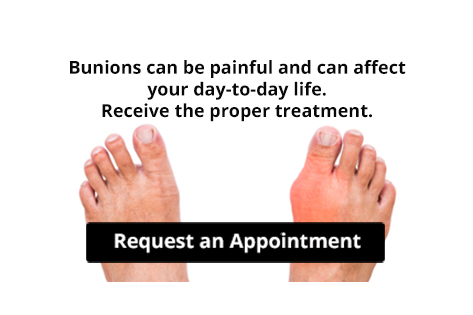
Have you noticed a bony protrusion on the side of your big toe? If so, you may have developed the foot condition known as a bunion. Don't let bunions interfere with your daily activities.
Published in Blog
Tuesday, 07 December 2021 00:00
Why You Should Strengthen Your Foot Core
 Strengthening the core of the feet is often neglected in training regimes for athletes, with more attention being given to the legs and thighs. But keeping the foot core muscles in good shape is essential, not only for overall foot health, but also for preventing injury. Foot core muscles are responsible for maintaining arch shape and shock absorption. Neglecting this area of the foot can lead to plantar fasciitis and even stress fractures. Typical exercises concentrating on the core include the short foot exercise, big toe press, and toe splay. It’s always a good idea to check in with a podiatrist for further information.
Exercising your feet regularly with the proper foot wear is a great way to prevent injuries and build strength. If you have any concerns about your feet, contact Julie Jurd-Sadler, DPM from Progressive Podiatry. Our doctor can provide the care you need to keep you pain-free and on your feet.
Exercise for Your Feet
Exercise for your feet can help you gain strength, mobility and flexibility in your feet. They say that strengthening your feet can be just as rewarding as strengthening another part of the body. Your feet are very important, and we often forget about them in our daily tasks. But it is because of our feet that are we able to get going and do what we need to. For those of us fortunate enough to not have any foot problems, it is an important gesture to take care of them to ensure good health in the long run.
Some foot health exercises can include ankle pumps, tip-toeing, toe rises, lifting off the floor doing reps and sets, and flexing the toes. It is best to speak with Our doctor to determine an appropriate regimen for your needs. Everyone’s needs and bodies are different, and the activities required to maintain strength in the feet vary from individual to individual.
Once you get into a routine of doing regular exercise, you may notice a difference in your feet and how strong they may become.
If you have any questions please feel free to contact our offices located in Ijamsville and Mouth Airy, MD . We offer the newest diagnostic and treatment technologies for all your foot and ankle needs.
Published in Blog
Blog Archives
- April 2025
- March 2025
- February 2025
- January 2025
- December 2024
- November 2024
- October 2024
- September 2024
- August 2024
- July 2024
- June 2024
- May 2024
- April 2024
- March 2024
- February 2024
- January 2024
- December 2023
- November 2023
- October 2023
- September 2023
- August 2023
- July 2023
- June 2023
- May 2023
- April 2023
- March 2023
- February 2023
- January 2023
- December 2022
- November 2022
- October 2022
- September 2022
- August 2022
- July 2022
- June 2022
- May 2022
- April 2022
- March 2022
- February 2022
- January 2022
- December 2021
- November 2021
- October 2021
- September 2021
- August 2021
- July 2021
- June 2021
- May 2021
- April 2021
- March 2021
- February 2021
- January 2021
- December 2020
- November 2020
- October 2020
- September 2020
- August 2020
- July 2020
- June 2020
- May 2020
- April 2020
- March 2020
- February 2020
- January 2020
- December 2019
- November 2019
